




From Party Elites to Primaries: The Evolution of Candidate Selection Methods in Democratic Parties
What Is Candidate Selection and Why Does It Matter
Candidate selection is the process by which a political party decides who will stand for election under its label. It is analytically distinct from the general election itself — what happens between parties and voters — and from leadership selection, which concerns who runs the party organization. Understanding this distinction matters because candidate selection shapes representation, internal accountability, and ultimately the composition of legislatures.
Who gets placed on a ballot is not a neutral administrative act. The individuals chosen reflect whose interests the party prioritizes, which social groups are visible in public life, and how much ordinary members can influence the direction of the organization. In proportional systems, list placement decisions carry enormous power; in single-member districts, endorsement by the party machine has historically been close to a guarantee of entry into politics.
For political scientists, candidate selection sits at the intersection of party organization theory, democratic theory, and electoral studies. For practitioners — whether campaign managers, party reformers, or legislators drafting electoral law — it is one of the most consequential procedural choices a party makes.
The Traditional Model: Elite Control and Party Gatekeeping
Party gatekeeping — the concentrated control of candidate nomination by senior party figures or central organs — was the dominant model across most democratic systems through much of the twentieth century. Central committees, party executives, and in some contexts informal networks of patrons vetted and approved candidates with little formal input from the membership.
The logic was straightforward. Cohesion required discipline, and discipline required that the people entering parliament owed something to the organization that put them there. In Westminster-style systems, this was the local constituency association filtered by central office approval. In continental multi-party systems, national executive committees often compiled closed lists with minimal transparent procedure.
This model rested on a particular understanding of what a party is: a disciplined organization that coordinates action in government, not a participatory forum. Iron law logic, associated with Roberto Michels' early twentieth-century work, suggested that oligarchic tendencies within organizations were essentially inevitable. Empirically, this seemed confirmed by decades of party behavior across Europe, Latin America, and beyond.
What sustained elite gatekeeping was not just organizational inertia. It was also the relatively stable mass-party model — large membership bases, strong union and associational ties, clear class or confessional identities — that gave party leaders a legitimacy claim even while concentrating nomination power. Once that model began to erode, the justification for gatekeeping weakened with it.
Academic Frameworks for Comparing Selection Methods
Comparative analysis of candidate selection became systematically possible once scholars developed tools to measure variation across parties rather than treating each case as unique. The most widely cited framework in the subfield is the one developed by Reuven Hazan and Gideon Rahat, which maps selection methods along two principal dimensions: inclusiveness (who participates in the selection) and centralization (at what territorial level decisions are made).
On the inclusiveness axis, selectorates range from a single party leader at one extreme to all registered voters at the other, with party members, delegates, and activists occupying intermediate positions. On the centralization axis, the question is whether national organs, regional bodies, or local branches hold decisive authority. These two dimensions are independent — a party can be highly inclusive but nationally centralized, for example, as with some national membership ballots.
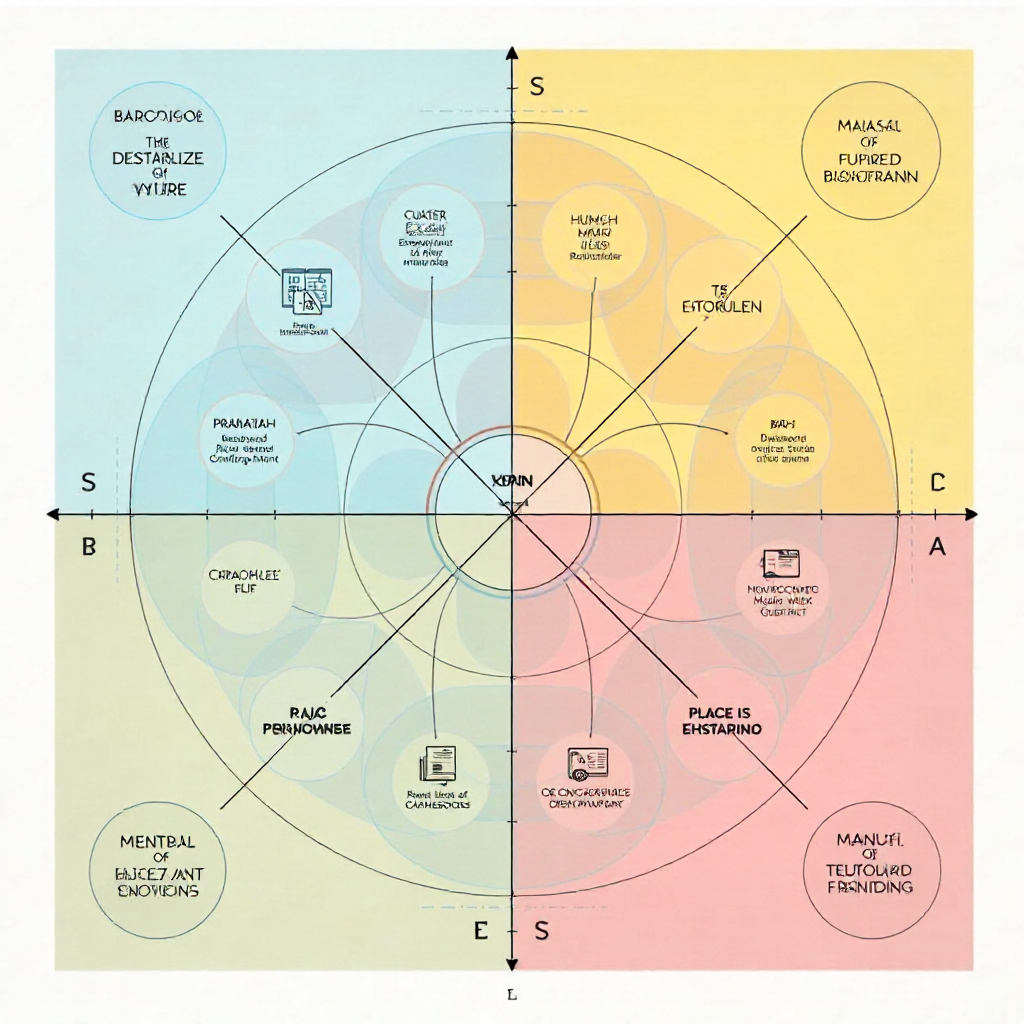
The Hazan and Rahat model, elaborated in their 2010 book Democracy within Parties, gave researchers a common vocabulary and a basis for cross-national comparison that had previously been lacking. It also sharpened the normative debate: moving along the inclusiveness axis does not automatically improve intra-party democracy (IPD) in every dimension that matters — accountability, deliberation, representation — and the trade-offs differ depending on where a party sits on both axes simultaneously.
Other frameworks have focused on the formal-informal distinction, noting that written party rules often describe procedures quite different from actual practice, and on the interaction between selection methods and electoral system incentives. The comparative literature now draws on datasets spanning dozens of countries and party families, making cumulative knowledge-building genuinely possible.
The Turn Toward Intra-Party Democracy: Drivers and Triggers
The shift toward more inclusive candidate selection methods accelerated from the 1980s onward, driven by a combination of structural pressures and deliberate reform choices. Party membership decline across Western Europe — documented in repeated electoral studies surveys and cross-national datasets — removed one of the key foundations of elite legitimacy. Parties with shrinking memberships could no longer credibly claim to represent a large organized constituency.
Legitimacy crises played a role too. Corruption scandals, perceived careerism among MPs, and growing public disengagement pushed party leaderships to adopt reforms that signaled openness. Primaries, in this reading, are partly a rebranding exercise — a way of associating the party with democratic participation at a moment when the institution itself is distrusted.
Legal pressure has been a significant trigger in some regional contexts. Several Latin American countries — including Argentina, Uruguay, and Honduras at various points — have mandated internal primaries by law, effectively removing the choice from party discretion. In Europe, legal intervention has been less direct, but state funding frameworks tied to membership thresholds or transparency requirements have created indirect incentives for procedural opening.
The global diffusion of primary-style models also reflects ideational dynamics. U.S. primaries, despite their well-documented pathologies, became a reference point that reformers in other contexts borrowed and adapted. Israeli Labor's adoption of membership ballots in the 1990s, the UK Labour Party's shift toward one-member-one-vote under John Smith, and the spread of open selection debates within European social democratic parties all reflect this diffusion, filtered through local institutional constraints.
Types of Contemporary Selection Systems
Contemporary parties use a spectrum of selection arrangements, and few fit neatly into a single category. The main types can be mapped as follows:
- Closed primaries: Only registered party members vote. Selection is inclusive relative to elite models but restricted relative to the electorate. Most European membership ballots fall here.
- Open primaries: Any registered voter, regardless of party affiliation, can participate. Common in U.S. state-level systems; rare but not unknown in Europe, with France's 2011 Socialist primary being a notable example.
- Delegate or convention systems: Elected delegates — themselves chosen by members or local branches — vote in a convention. This intermediate model attempts to balance deliberation with representation.
- Hybrid selection systems: Mixed models that combine a membership ballot with a weighted leadership panel, or that give the party executive a veto over candidates who pass a membership threshold. The UK Conservatives' longstanding model of local shortlisting with central approved-list filtering exemplifies this type.
- Leadership-appointed lists: The national leadership retains direct control over list composition or order. Still common in newer or more centralized parties, particularly populist formations.
Decentralization adds another layer. Some parties devolve selection entirely to constituency or regional bodies; others maintain national oversight of local processes. Federal party structures, such as those in Germany or Canada, create additional complexity where national and subnational organizations may operate different procedures simultaneously.
Trade-offs and Unintended Consequences
More inclusive selection processes carry genuine costs alongside their democratic benefits. Researchers have documented several recurring tensions that any honest account of the field must acknowledge.
First, there is the cohesion problem. Candidates who win competitive primaries may feel they owe their position to their personal support base rather than to the party organization. This weakens the leverage party whips and leaders have over legislative behavior. Studies of U.S. Congress and, more recently, of European parliaments that have introduced primaries suggest that primary-elected legislators show somewhat higher rates of party-line defection, though the magnitude varies considerably by context.
Second, inclusive processes can systematically favor well-funded or high-profile candidates. Opening a ballot to tens of thousands of members — or to all voters — rewards name recognition and campaign capacity. In practice, this can reproduce inequalities rather than disrupt them, with incumbents, celebrities, and wealthy candidates enjoying structural advantages over grassroots challengers.
Third, there is what some scholars call the activism bias: members who participate in internal ballots tend to be more ideologically committed than the median voter the party needs to win. Evidence from the UK Labour Party under Jeremy Corbyn — selected partly through a dramatic expansion of membership voting rights — illustrates how inclusive procedures can produce nominees misaligned with the general electorate, though this relationship is contested and context-dependent.
Gender quotas and reserved lists interact with these trade-offs in complex ways. Quota mechanisms imposed centrally can conflict with decentralized or open selection models where local electorates or members resist designated shortlists. The tension between procedural inclusiveness (let members decide) and substantive inclusiveness (ensure women are selected) is one of the genuinely unresolved normative debates in this literature.
Current Directions and Open Research Questions
The academic literature on candidate selection is still developing in several directions, and the empirical picture remains incomplete in important areas.
Digital voting platforms have made remote membership ballots operationally feasible at scale, but questions about security, verification, and the effect of low-friction participation on outcome quality are only beginning to be addressed empirically. The UK Labour Party's multiple leadership and candidate selection rounds since 2015 offer data, but systematic cross-national comparisons of digital versus in-person ballots are scarce.
Populist parties present an interesting theoretical puzzle. Several right-wing populist formations have adopted primaries rhetorically — emphasizing the will of the people against established elites — while simultaneously maintaining tight leadership control over candidate vetting. This selective deployment of participatory language while preserving centralized authority challenges simple models of the inclusiveness–centralization trade-off and raises questions about when procedural reforms reflect genuine power shifts versus legitimation strategies.
The integration of gender quota mechanisms with varying selectorate models remains an active research frontier. Early evidence suggests that quota effectiveness depends heavily on whether selection is centralized enough for enforcement to be credible — highly decentralized systems tend to produce lower quota compliance rates.
Finally, comparative work on newer democracies — in Eastern Europe, Sub-Saharan Africa, and parts of Asia — has complicated the assumption that parties in these contexts simply lag behind a Western trajectory. Distinct patterns of patronage, ethnic voting, and weak party institutionalization produce selection dynamics that require their own theoretical frameworks rather than imported models.
FAQ: Candidate Selection Methods in Democratic Parties
What is the difference between an open and a closed primary in intra-party terms?
A closed primary restricts voting to registered party members, while an open primary allows any eligible voter to participate regardless of party affiliation. The distinction matters for the composition of the selectorate: closed systems keep selection within the party community; open systems expose it to cross-partisan influence, which can moderate or destabilize candidate profiles depending on context.
How do researchers measure the degree of intra-party democracy in a party?
Most comparative work uses a combination of formal rule analysis and survey data. The Hazan and Rahat framework operationalizes IPD through the inclusiveness and centralization dimensions, scoring parties based on who formally participates in selection and at what level. More recent approaches supplement this with process tracing — examining whether formal rules match actual practice — and with candidate surveys asking how much pressure or guidance they received from party organs during selection.
Do more inclusive selection methods actually improve electoral outcomes?
The evidence is mixed and context-dependent. Some studies find that primaries increase electoral competitiveness by generating public attention and signaling internal party vitality. Others find no consistent electoral advantage and document costs in terms of candidate quality, spending, and post-primary party unity. The safest conclusion is that inclusiveness alone does not predict electoral success — institutional context, party system structure, and the specific design of the procedure all moderate the relationship.
Why do some parties adopt primaries while others retain elite selection?
Reform adoption depends on a combination of external pressure — legal mandates, declining membership, legitimacy crises — and internal power dynamics. Parties with strong incumbent elites who benefit from gatekeeping face higher internal resistance to reform. Parties in opposition, or those experiencing electoral failure, are more likely to adopt primaries as a renewal signal. Ideological tradition also plays a role: social democratic parties have historically been more receptive to membership-based models than cadre or catch-all parties with centralized organizational cultures.
How do gender quotas interact with candidate selection procedures?
Gender quotas and selection procedures are deeply intertwined. Centralized list quotas are easier to enforce in systems where the national party controls list order directly. In decentralized or open primary systems, quota compliance depends on local willingness, which varies substantially. Some parties use reserved lists or twinning arrangements to work around the tension, but these mechanisms require sufficient central authority to implement — creating a structural incentive for parties committed to gender balance to preserve some degree of centralized oversight even as they open other aspects of selection.